Sleepiness at Rest During Perimenopause: The Debt That Night Leaves for the Day
Article reviewed and validated by :

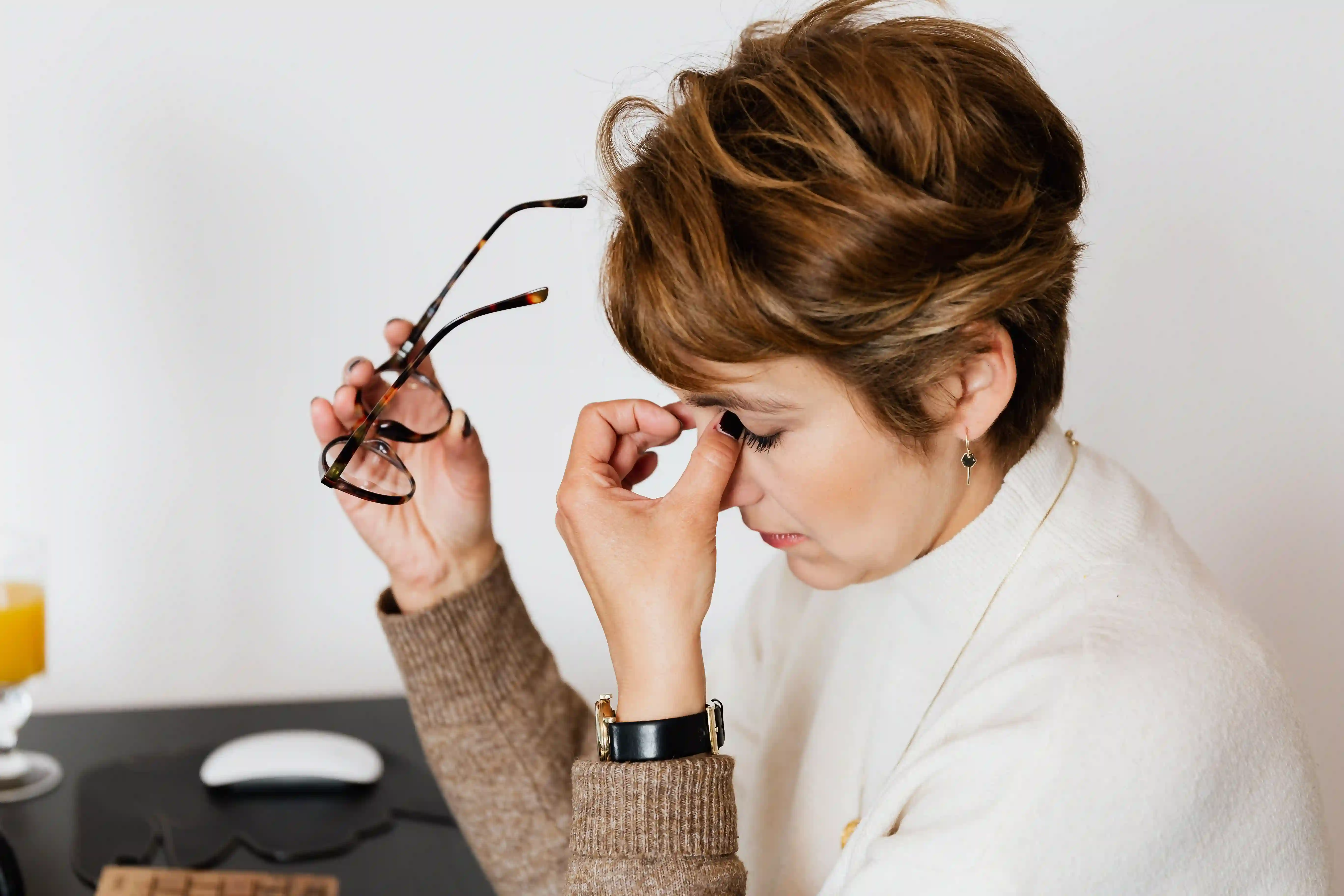
Dozing off in front of a screen, while reading, or as soon as you sit down is often attributed to age, a busy day, or simply a lack of sleep. The usual solution is to go to bed earlier or drink more coffee.
These solutions are not enough when drowsiness persists despite getting a normal amount of sleep each night. This indicates that sleep is no longer fulfilling its role, leaving a deficit each morning that the brain demands be made up during the day. At this stage, several factors contribute to this: lighter sleep due to declining progesterone levels and hot flashes, evening habits that reduce melatonin, and sometimes nocturnal breathing pauses that prevent restorative sleep.
Fatigue or drowsiness?
The two words are often used interchangeably, but they do not mean the same thing. Fatigue is a lack of energy: movements feel difficult, and exertion is exhausting, but it doesn’t necessarily make you fall asleep. Drowsiness is a tendency to fall asleep. For specialists, the term also refers to the very first stage of sleep—the one that precedes light sleep, followed by deep sleep and REM sleep (the dream stage).
This distinction is important because drowsiness primarily refers to nighttime sleep: along with impaired alertness, it is one of the consequences of sleep debt.
There is a tool for assessing this: the Epworth Sleepiness Scale, a questionnaire that quantifies the tendency to fall asleep during the day. It was used, in particular, in a trial described below.
A study by the National Institute for Sleep and Vigilance and MGEN, conducted primarily among young people, links screen-related sleep disturbances to daytime sleepiness—particularly in the early afternoon or early evening—as well as irritability and difficulty concentrating.
Is this common?
One in four people does not get enough sleep on weekdays. Only 16% of people with sleep disorders receive treatment in France. And hormonal changes play a role: both menopause and premenstrual syndrome—with their relative excess of estrogen and lack of progesterone—increase the risk of sleep disorders. However, perimenopause can last from two to ten years before the last menstrual period, and the symptoms are sometimes more severe during this time than after menopause.
Where does sleep debt come from?
Debt That Keeps Piling Up
Throughout the day, a substance called adenosine builds up in the brain as cells use up their energy. The more it accumulates, the greater the pressure to sleep becomes: it is this substance that triggers the urge to sleep by silencing the neurotransmitters that keep us awake. Sleep causes it to decrease, while caffeine simply blocks the signal without making it disappear.
William Dement, at Stanford University, has shown that the brain keeps track of hours of sleep and records what is known as sleep debt. Among its consequences are impaired alertness, drowsiness, and an increased risk of accidents of all kinds.
Quality matters just as much as duration. Eight hours spent in bed do not equal eight hours of restful sleep: when cortisol—the hormone that promotes wakefulness in the morning—and melatonin—the hormone that signals nighttime—are out of sync with each other, part of the night is not restorative.
Sleep Affected by Hormones
Perimenopause begins with a drop in progesterone, between about thirty-five and forty-five years of age. Let’s recall where it comes from: progesterone is produced only after ovulation, by the corpus luteum—the small, temporary gland that the follicle becomes once the egg is released. When ovulation becomes less regular, or when a cycle occurs without ovulation, the second half of the cycle proceeds without it. However, progesterone has a sedative effect—that is, it promotes calmness and sleep: its decline is enough to make nights feel lighter, even when their duration remains the same.
Estrogen levels then become irregular. Estrogen plays a role in the production of serotonin, a brain chemical from which melatonin is produced—the hormone that signals to the body that it is nighttime. A decline in estrogen levels could therefore also slow down melatonin production. These fluctuations also trigger hot flashes—periods of intense heat lasting from thirty seconds to ten minutes, especially at night—followed by sweating that disrupts sleep.
As a result, sleep becomes poorer and more fragmented, even though the amount of time spent in bed remains the same.
Breathing pauses that go unnoticed
Sleep apnea involves repeated pauses in breathing during the night. It is one of the causes of non-restorative sleep and affects 5 to 7 percent of the general population and 15 percent of people over the age of seventy. Among women, it remains significantly underdiagnosed.
Treatment begins with respiratory support at night, pending diagnosis and treatment of the underlying cause, followed by efforts to address any excess weight. Sleeping pills, on the other hand, worsen existing sleep apnea, in addition to increasing daytime drowsiness and the risk of falls and accidents.
A dinner that casts a shadow over the night
A dinner that is too heavy, too high in protein, or accompanied by alcohol is one of the common causes of poor-quality sleep. Heavy alcohol consumption also has an additional effect during this time: it can dilate blood vessels and disrupt body temperature regulation, which increases the frequency and intensity of hot flashes, even before menopause.
Screens that suppress melatonin
Melatonin begins to be secreted as the light dims, two to three hours before bedtime. Evening light—and in particular the blue light from screens and bright lights—slows down this signal. The retina contains cells that detect this light and signal the body’s internal clock: as long as these cells are stimulated, the body remains in “day” mode, melatonin is released later, and nighttime begins later than bedtime.
Weight: Both a consequence and a factor
Sleep regulates two appetite hormones: leptin (the satiety hormone) and ghrelin (the hormone that signals hunger). Chronic sleep deprivation could therefore partly explain the rise in overweight, obesity, and type 2 diabetes.
Sleeping too little and gaining weight
As part of the NutriNet-Santé study, 49,086 adults—including 37,846 women—completed a detailed questionnaire about their sleep between January and June 2014, in addition to at least three surveys about their diet.
Among people who slept six hours or less per night, the risk of obesity was 34% higher among women and 50% higher among men.
In practice, ensuring adequate sleep is part of weight management.
Basal metabolism—that is, the energy the body expends at rest—decreases significantly during this period, which makes it easier to gain weight. However, managing excess weight is part of the treatment for sleep apnea. Furthermore, for those who are overweight, losing five kilograms improves tolerance to hot flashes—which also disrupt sleep—by about 30 percent.
Regain your alertness
The strategies focus first on the evening meal and stimulants, and then on the body's internal clock.
Lighten Up in the Evening
- The most substantial meal at lunchtime, when digestion is most efficient, paired with a protein-rich breakfast.
- A light, carbohydrate-rich dinner, including vegetables, whole grains, or legumes, and no alcohol. If you do have a glass of wine, it’s best to have it earlier, when you get home from work.
- This evening light keeps insulin—the hormone that transports sugar into cells—at low levels throughout the night. A nighttime fast lasting thirteen to sixteen hours, whose benefits include restful sleep, can prolong this effect. It should be avoided during the second half of the menstrual cycle and adjusted in cases of an underactive thyroid or exhaustion.
Stimulants at the Right Time
- No more than two or three cups of black coffee a day, and no coffee, black tea, or hot chocolate in the afternoon.
- Matcha in the morning: its theanine, a compound found exclusively in tea, promotes concentration and provides a gentler boost of energy.
Set the clock to the correct time
- Natural light in the morning, whether outdoors or by the window. Combined with a little exercise, it can help regulate cortisol levels, which promotes wakefulness in the morning.
- Regular bedtimes and wake-up times, while respecting your own rhythm—whether you're a morning person or a night owl.
- Don't stay in bed longer than you actually sleep: spending too much time in bed can lead to insomnia.
- Don't miss the train. Sleep occurs in cycles of about ninety minutes. When you start yawning and your eyelids get heavy, it's time to go to bed—otherwise, the next train won't come for another hour and a half.
A nap—but a short one
- Fifteen to twenty minutes. These short naps slow the heart rate and are part of the traditional Mediterranean lifestyle.
- No long naps—which experts recommend avoiding.
Protecting Melatonin
- A screen-free period before bedtime, or, if that's not possible, glasses with orange lenses or a screen filter.
- No bright lights in the evening.
Get Moving During the Day
Dr. Joëlle Adrien, of the National Institute of Sleep and Vigilance, describes a seesaw principle: the better you manage sustained activity during the day, the better you sleep at night.
Magnesium, zinc, melatonin, and daytime alertness
A double-blind trial (in which neither the participants nor the researchers knew who was receiving what) involved 43 people with insomnia whose average age was 78. A combination of magnesium, zinc, and melatonin was compared to a placebo, a preparation containing no active ingredients.
All sleep scores improved, including daytime sleepiness, with increased alertness and more energy.
In this study, improved sleep was associated with reduced daytime sleepiness. The form and dosage of any supplements should be determined by your therapist or pharmacist; since melatonin is a hormone, medical advice is required.
Other Possible Causes
Drowsiness and fatigue can also result from other mechanisms, which often occur in addition to these. Each is discussed in detail in a separate article:
- Sleep that no longer restores energy and difficulty waking up: see “Morning Fatigue.”
- Waking up in the middle of the night or having trouble falling asleep: see “Nighttime Awakening.”
- An underactive thyroid: see “Weight Gain.”
- Iron deficiency or impaired cellular energy production: see “Energy Slumps.”
These causes are not mutually exclusive, and their combination is the rule rather than the exception.
When to Seek Medical Attention
Seek immediate medical attention if you experience drowsiness while driving, nighttime breathing pauses noticed by those around you, drowsiness caused by sleeping pills or sedatives (which should be tapered off gradually, never abruptly), or restless legs (an irresistible urge to move your legs at bedtime) that prevent you from sleeping—and for which iron deficiency should be investigated.
Seek remote care if drowsiness persists despite getting enough sleep at night and maintaining a regular sleep schedule, if it’s affecting your work, or if you’re experiencing several signs of an underactive thyroid (sensitivity to cold, weight gain, slowed movements, forgetfulness). This is something to discuss with your doctor, who may refer you for a sleep evaluation.
Key takeaways
Drowsiness while resting reflects a sleep debt that the body needs to repay during the day. During this time, a drop in progesterone impairs sleep, fluctuations in estrogen trigger night sweats and may inhibit melatonin production, and breathing pauses can prevent a restful night’s sleep. Being overweight, alcohol, a heavy dinner, and screen time in the evening make the situation worse.
These mechanisms explain why you can sleep for a long time and still feel drowsy during the day. They don’t mean you can skip taking action, and there are several factors that depend on each individual: a light dinner without alcohol, no stimulants in the afternoon, morning light, a regular schedule, sustained activity during the day, a short nap, and a screen-free period before bed.
Frequently Asked Questions
I sleep eight hours and fall asleep in front of the TV. Is that normal?
Not necessarily. Duration does not guarantee quality: poor-quality sleep, interrupted by hot flashes or pauses in breathing, leaves you sleep-deprived even after long nights. If drowsiness persists, it should be evaluated.
Is taking a nap a good idea?
Yes, as long as it's short—between fifteen and twenty minutes. Long naps should be avoided.
Would a sleeping pill help me recover better?
Sleeping pills increase drowsiness the next day, raise the risk of falls and accidents, and worsen sleep apnea. Both starting and stopping these medications should be done under your doctor's guidance.
A glass of wine in the evening helps me fall asleep. Is that a problem?
Alcohol consumed at dinner is one of the causes of poor-quality sleep, and it increases hot flashes, even before menopause.
Article reviewed and validated by :
Sources: